The Screaming Compressor and the $15,000 Lie
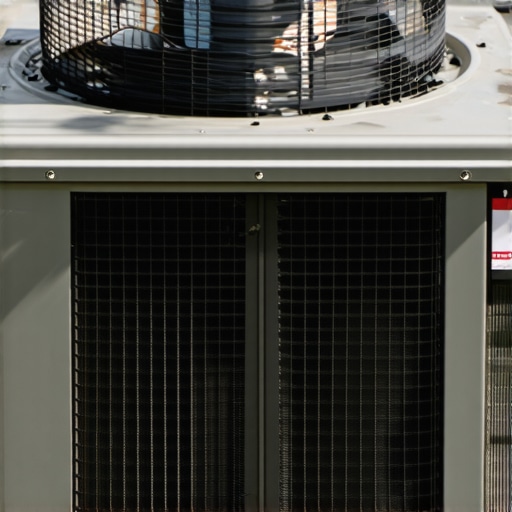
I followed a ‘Sales Tech’ last Tuesday who quoted a sweet old lady in a 115-degree valley heatwave $15,000 for a total AC installation. He told her the ‘jet engine’ sound coming from her condenser was an internal explosion. I walked up to the disconnect, pulled the service panel, and saw a bulging $20 capacitor and a contactor pitted worse than a gravel road. The sound she heard wasn’t an explosion; it was the compressor motor trying to overcome Locked Rotor Amps (LRA) without a start-assist. I swapped the cap, cleaned the coils, and that old Trane purred like a kitten. This is why I hate the modern HVAC industry’s pivot to sales over service. If your unit sounds like a Boeing 747 taking off from your flower bed, you don’t necessarily need a new system—you need a tech who understands physics, not a guy with a shiny clipboard and a commission check.
The Thermodynamics of the ‘Jet Engine’ Roar
When we talk about an AC unit sounding like a jet engine, we are usually describing one of three mechanical failures: high head pressure, liquid slugging, or a failing condenser fan bearing. Let’s look at the thermodynamic zooming of high head pressure. Your outdoor coil’s job is to reject heat. If that coil is caked in ‘Pookie’ or dust, or if the ‘Sparky’ who wired the house didn’t provide stable voltage, the compressor has to work twice as hard to push that ‘juice’ (refrigerant) through the expansion valve. This creates a massive pressure spike. When the compressor struggles against this pressure, the internal bypass valve can pop, creating a high-pitched scream or roar that sounds exactly like a turbine.
“Equipment capacity shall be determined based on the loads calculated using Manual J, and the heat of compression must be rejected to the ambient air regardless of mechanical efficiency.” — ACCA Manual S / ASHRAE 15
Locked Rotor Amps and the Inrush Current Chaos
Every time your AC starts, it requires an ‘inrush current’—a massive surge of electricity to get the rotor spinning. This is where the physics of ‘Sensible Heat’ in a dry climate like ours becomes a nightmare. In 110-degree ambient temperatures, the refrigerant is already at a high resting pressure. The compressor motor has to fight that pressure from a dead stop. If your start capacitor is weak, the motor stalls. That ‘jet engine’ hum is the sound of electricity literally vibrating the copper windings in the motor as they heat up to 300 degrees in seconds. If you don’t have a Hard Start Kit installed, you’re shortening the life of your compressor every time that thermostat clicks.
Why Your Mini-Split or Furnace Repair Might Be Linked
You might think your heating service or furnace repair has nothing to do with your AC roar, but it’s all about the ‘Tin Knocker’s’ original sin: Airflow. If your furnace’s blower motor is failing or the evaporator coil inside is choked with pet hair, the refrigerant doesn’t evaporate. It stays a liquid. Compressors are vapor-only pumps. Trying to compress a liquid is like trying to squeeze a rock—it’s called ‘slugging,’ and it makes a violent, mechanical clattering sound that can mimic a jet engine. Whether it’s a standard split system or a high-efficiency mini-split, if you can’t touch the heat, you can’t move the heat.
“The most expensive equipment in the world cannot overcome a bad duct system. Static pressure is the silent killer of compressors.” — Industry Axiom
The Math: Repair vs. Replace in the 2025 Regulatory Era
Before you commit to a $10,000+ AC installation because of a scary noise, look at the math. A new condenser fan motor or a hard start kit is a drop in the bucket compared to a full system swap. However, if your unit is still running on R-22 (the old ‘gas’), you’re fighting a losing battle. With the 2025 transition to A2L refrigerants like R-454B, the price of the ‘juice’ is only going up. If the roar is coming from a compressor that has already started ‘cooking’ its own oil—which smells like a sour, acidic chemical burn—then the system is toast. But if it’s just a bearing or a pressure issue? Save your money. Find a tech who still carries a manifold and a multimeter, not a sales brochure.