The Paper Trail of Thermal Efficiency
You just signed a check for five figures. The installer is packing up his tools, the house is finally dropping below 75 degrees, and you’re staring at an invoice that says ’18 SEER.’ But here is the cold, hard truth from someone who has spent thirty years crawling through blown-in fiberglass insulation: that number on the paper doesn’t mean a thing if the hardware doesn’t match the math. In the HVAC trade, we see ‘Sales Techs’ promise the moon and install a meteor every single day. If you don’t know how to audit your own AC installation, you are essentially buying a Ferrari engine and letting a tin knocker hook it up to a golf cart transmission.
My old mentor, a man who could sniff out a refrigerant leak from the curb, used to bark at me, ‘Kid, you can’t cool what you can’t touch!’ He wasn’t talking about the air; he was talking about the surface area of the evaporator coil. He taught me that horsepower is for show, but airflow is for pro. This is the foundation of the Seasonal Energy Efficiency Ratio (SEER). It is a measure of cooling output divided by total electric energy input. But here is the kicker: SEER is a lab-rated maximum, like the MPG on a window sticker. If your heating service provider didn’t match the indoor coil to the outdoor condenser perfectly, your 18 SEER system is likely sweating its guts out at a 14 SEER reality.
The Thermodynamic Reality of Latent vs. Sensible Heat
When we talk about efficiency, we have to use Thermodynamic Zooming. Your AC doesn’t ‘produce’ cold; it removes heat. Specifically, it deals with sensible heat (the temperature you see on the thermostat) and latent heat (the humidity). In a high-efficiency system, the evaporator coil must drop below the dew point of the return air to wring out moisture. If your AC installation involved an oversized condenser paired with an old, undersized indoor coil, the system will ‘short cycle.’ It will satisfy the thermostat’s sensible heat requirement in ten minutes, but it won’t run long enough to pull the juice out of the air. You’ll be sitting in a 70-degree room that feels like a Louisiana swamp. Verifying your SEER rating is about ensuring the system can actually perform this phase change effectively without burning through a sparky’s nightmare of electricity.
“The most expensive equipment in the world cannot overcome a bad duct system. Total external static pressure must be measured to ensure the system meets its rated SEER performance.” – ACCA Manual D
Step 1: The AHRI Reference Number (The Only Number That Matters)
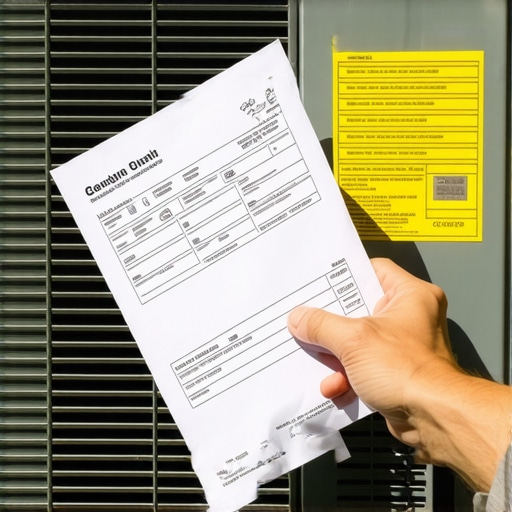
Forget the glossy brochure. If you want to verify what you paid for, look for the AHRI (Air-Conditioning, Heating, and Refrigeration Institute) Reference Number on your invoice. If it isn’t there, call the office and demand it. This number is the DNA of your system. You take that number to the AHRI Directory website, and it will tell you exactly what the ‘matched’ efficiency of your outdoor unit, indoor coil, and furnace blower (or air handler) is. In many cases, an 18 SEER condenser only hits 18 SEER when paired with a specific high-efficiency variable-speed blower. If they hooked it up to your 20-year-old furnace repair special, you’ve been hosed. The AHRI certificate is the only legal proof of efficiency.
Step 2: Decoding the Model Numbers
Look at the model number of the condenser sitting outside. Most manufacturers hide the nominal SEER rating in the digits. For example, a model number starting with 4TTR6036 is likely a 16 SEER unit (the ‘6’ often denotes the tier). However, this is just the ‘up-to’ rating. The real efficiency is determined by the internal volume of the evaporator coil. A mini-split system is much easier to verify because the components are hard-coded to work together, but for central air, the mismatch is where efficiency goes to die. I’ve seen heating service ‘pros’ use pookie (mastic) to hide the fact that they jammed a 3-ton coil onto a 4-ton blower. That is a recipe for a frozen coil and a dead compressor within three seasons.
The SEER2 Transition and the 2025 Regulatory Cliff
We are currently in the middle of the biggest shift in HVAC history. As of 2023, we moved to SEER2, which tests units under higher static pressure—mimicking real-world ‘bad’ ductwork. If your invoice says ’16 SEER’ but doesn’t specify SEER2, you might be looking at old stock. Furthermore, we are staring down the ‘A2L’ refrigerant transition. By 2025, R-410A (the current gas) is being phased out for mildly flammable refrigerants like R-454B. This makes the verification of your current installation even more critical. You want to ensure you aren’t paying premium prices for a ‘dead’ technology platform that will be expensive to charge with juice in five years.
“Proper equipment sizing, according to Manual J, and matched system components are prerequisites for any energy efficiency claims.” – ASHRAE Standard 90.1
Static Pressure: The Silent SEER Killer
I don’t care if the invoice says 25 SEER; if your tin knocker didn’t widen the return air drop, you aren’t getting it. Air is heavy. A 3-ton system needs to move 1,200 cubic feet of air per minute. If the ductwork is restricted, the blower motor has to work twice as hard, driving up the wattage and tanking your actual SEER. When I walk into a house for a furnace repair and hear the vents whistling like a tea kettle, I know that ‘high-efficiency’ AC is actually running at the cost of a 10 SEER relic from the 90s. Always ask your installer for a ‘static pressure test’ report. If they look at you like you have three heads, you’ve hired a parts-changer, not a technician.
Summary Checklist for Homeowners
- Demand the AHRI Certificate of Product Ratings.
- Match the indoor coil model number to the outdoor condenser on that certificate.
- Check the ‘mating’ of the blower motor—is it a PSC motor or an ECM? (ECM is required for high SEER).
- Ensure the refrigerant lineset was flushed or replaced; old oil from an R-22 system will contaminate the new juice and kill efficiency.
At the end of the day, an AC is just a box of copper, aluminum, and physics. The invoice is the promise, but the AHRI number is the proof. Don’t let a slick salesman tell you it’s ‘basically’ an 18 SEER. Make them prove the thermodynamics. Because when it’s 105 degrees outside and your suction line isn’t ‘beer can cold’ because of a mismatched coil, that invoice won’t keep you cool.