The Sound of a $20,000 Mistake
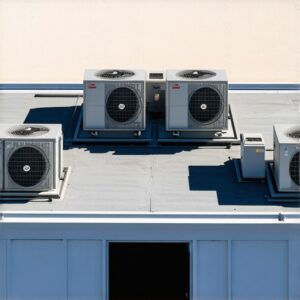
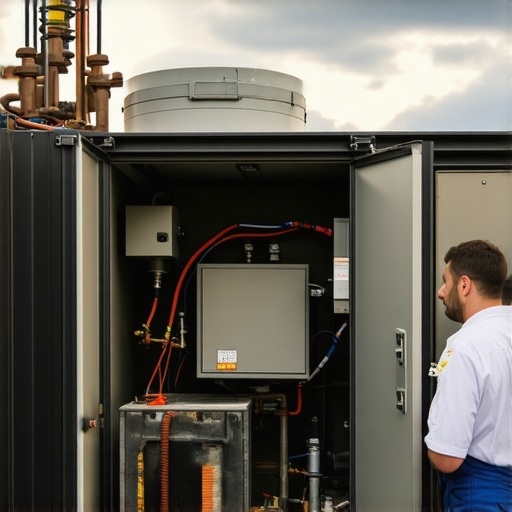
The first thing you notice in a commercial space when the HVAC dies isn’t the heat; it’s the silence. It’s a heavy, pressurized silence that smells like stagnant dust and impending financial loss. Last August, I walked into a local independent pharmacy where the owner was nearly in tears. She’d been paying $150 a quarter for a ‘Value-Guard’ maintenance contract from one of those big-box franchises. The previous week, their ‘technician’—who I suspect was probably delivering pizzas a month prior—told her that her 7.5-ton rooftop unit (RTU) had a ‘blown’ compressor and a ‘porous’ evaporator coil. He quoted her $22,000 for a full AC installation and replacement. I climbed up the rusted ladder, popped the service panel, and found the real culprit: a $45 dual-run capacitor that had bulged like a soda can in a freezer and a condensate drain line so backed up with ‘algae snot’ it had tripped the float switch. That’s the dirty secret. Those low-cost contracts aren’t service agreements; they are hunting licenses for ‘Sales Techs’ to find reasons to condemn perfectly good iron.
“The most expensive equipment in the world cannot overcome a bad duct system or a technician who prioritizes commission over Ohm’s Law.” – Industry Axiom
The Physics of the ‘Pencil-Whip’
In the trade, we call it ‘pencil-whipping’ the checklist. A low-cost commercial contract doesn’t cover the time it actually takes to perform thermodynamic zooming on a system. To truly service an RTU, you have to look at the latent heat removal. If your tech isn’t measuring the wet-bulb temperature entering the coil and comparing it to the leaving air, he isn’t doing maintenance. He’s just looking at the unit and hoping it doesn’t break while he’s there. To remove humidity (latent heat), the evaporator coil must stay below the dew point of the return air. When a system is neglected, the static pressure rises because of a ‘tin knocker’ who undersized the returns or a filter that’s turned into a brick of drywall dust. This causes the coil temperature to drop too low, eventually slugging the compressor with liquid juice—and liquid doesn’t compress. It just shatters the valves with a sound like a bag of marbles in a blender.
Why Cheap Maintenance Kills Mini-Splits
Many modern commercial offices are moving toward the mini-split for server rooms or individual offices. These are precision machines, not the old-school tanks we used to bolt to the ground. A low-cost contract tech usually skips cleaning the blower wheel on these. They’ll spray some cheap foam on the coil and call it a day. But those wheels are balanced to the gram. A little bit of dust imbalance leads to a bearing screech that sounds like a banshee in the hallway. If you aren’t checking the thermistors and the inverter board’s DC voltage, you’re just waiting for a $1,500 circuit board to fry. Commercial heating service is no different. On a furnace repair call for a warehouse, I’ve seen ‘maintained’ units with cracked heat exchangers that were missed for years because the tech never bothered to pull the blower and look at the stress points. That’s not just bad service; it’s a carbon monoxide hazard.
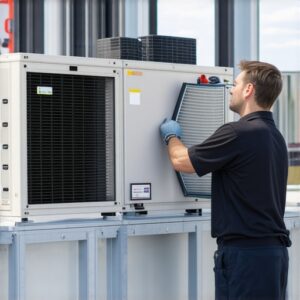
“Maintenance shall be performed in accordance with the manufacturer’s instructions and shall include the cleaning of coils, the replacement of filters, and the inspection of the burner assembly.” – ASHRAE Standard 62.1
The Sensory Reality of a Burnout
When a compressor actually fails under one of these neglectful contracts, you smell it before you see it. An acidic, sour stench—refrigerant oil that’s been cooked into a corrosive sludge. Once that acid gets into the lines, you can’t just swap the unit. You have to flush the lines with R-11 or a similar solvent, or the new compressor will be dead in six months. The ‘Sales Tech’ won’t tell you that. He just wants the AC installation commission. He’ll leave the old suction line full of acid, slap on a new condenser, and wait for your next heating service call to tell you that you need more work. They use ‘Pookie’ (mastic) to cover up air leaks instead of actually sealing the ductwork, and they’ll ignore a furnace repair need until the heat exchanger literally starts ‘rolling out’ flames.
The 2025 Regulatory Cliff
The game is changing. With the R-410A phase-out and the move toward A2L refrigerants like R-454B, maintenance is about to get significantly more expensive and technical. These new gases are ‘mildly flammable.’ You can’t have a ‘Sparky’ or a hack tech poking around these systems with a leak detector from 1995. The new units will have sensors that shut the system down if a leak is detected in the evaporator. If your low-cost contract tech doesn’t understand the sequence of operation for these sensors, your business will be dark for days while he tries to ‘guess’ what’s wrong. Investing in a high-quality, airflow-focused technician is the only way to avoid the ‘Thermodynamic Trap’ of the next decade. Real maintenance is about static pressure, superheat, and subcooling—not just a clean filter and a smile.