The Sound of a Dying Cold: Why Your Utility Closet Looks Like the Arctic
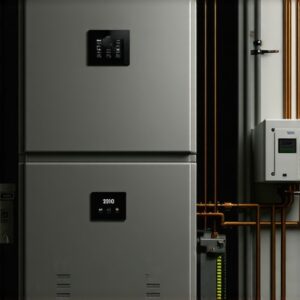
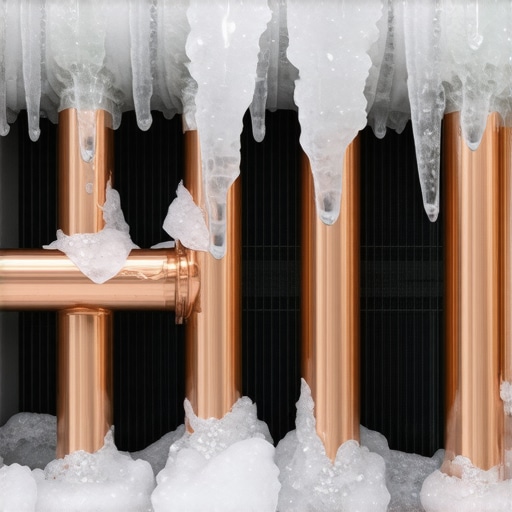
You wake up in a puddle of your own sweat, the air in the bedroom is thick enough to chew, and the registers are gasping out a faint, pathetic breeze that smells faintly of damp basement. You walk over to the air handler, pull the service panel, and there it is: a shimmering, crystalline block of ice encasing your evaporator coil. It looks like a prop from a low-budget sci-fi movie, but it is actually the physical manifestation of a thermodynamic failure. Most homeowners see this and immediately think they need a massive AC installation to the tune of ten grand. The truth is usually far more technical, and often, far cheaper if you know how to read the gauges.
The Sales Tech Scam: A Case Study in Dishonesty
Last August, I followed a ‘Sales Tech’—those guys who wear crisp white shirts and carry more brochures than tools—out to a house in a humid coastal suburb. He’d told this homeowner, a retired schoolteacher, that her compressor had ‘lost its heart’ and she needed a full $14,000 system replacement immediately. I took one look at the frozen suction line—the thick copper pipe that should be beer can cold but was instead buried in an inch of frost. I didn’t reach for a sales contract; I reached for my nut driver. After thawing the block, I found a 4-inch pleated filter so packed with dust and cat dander it had basically turned into a piece of drywall. The blower motor was screaming against the static pressure, and the coil had dropped below the dew point until the condensate turned to ice. Total cost for the fix? A $30 filter and a lecture on furnace repair maintenance. He wasn’t a technician; he was a predator in a polo shirt.
“The most expensive equipment in the world cannot overcome a bad duct system or a neglected maintenance schedule.” – ACCA Manual J Standards
Thermodynamic Zooming: How the Ice Forms
To understand why a unit freezes, you have to stop thinking about ‘blowing cold air’ and start thinking about heat transfer. Your AC is a heat sponge. The evaporator coil inside your home is where the magic happens—or where it fails. Liquid refrigerant, or juice as we call it, enters the coil through a metering device. It’s designed to boil at a temperature well below the room air. As the blower fan pushes warm, humid air across those fins, the refrigerant absorbs the sensible heat (the temperature you feel) and the latent heat (the humidity). If everything is balanced, the moisture in the air hits the cold metal, turns into liquid water, and drips into the primary drain pan. But if the airflow is restricted, or the refrigerant pressure is off, that coil temperature drops below 32°F. The moisture doesn’t just condense; it flash-freezes. Once a thin layer of ice forms, it acts as an insulator, preventing the remaining air from reaching the refrigerant. This creates a feedback loop where the coil gets colder and colder until you have a solid 50-pound block of ice choking your system.
The Forensic Diagnosis: Airflow vs. Refrigerant
When I see a frozen unit, I look at two primary suspects: Airflow (the lungs) and Refrigerant (the blood). If the tin knocker who installed your ducts didn’t size the return air drops correctly, your system is suffocating. I’ve seen mini-split units freeze up simply because the homeowner didn’t realize there were plastic mesh filters behind the flip-up cover that needed washing every month. Then there is the gas. If you have a small pinhole leak in your evaporator coil, the pressure in the system drops. In the world of physics, lower pressure equals lower temperature. A ‘low’ system actually runs colder than a properly charged one, right up until it becomes a block of ice. If a tech tells you that you just need to ‘top it off’ every year, he’s a hack. It’s a sealed system. If it’s low, it’s leaking, and that acidic, sour smell of a compressor burnout is just around the corner if you don’t fix the source.
“Proper refrigerant charge and airflow are critical to achieving the rated SEER and ensuring equipment longevity.” – ASHRAE Standard 15
The Physics of the Humid South
In high-humidity zones, the enemy isn’t just heat—it’s water. A 3-ton unit in Houston or Miami has to work twice as hard as one in Phoenix because it’s fighting latent heat. If your unit is oversized (a common mistake by lazy contractors), it will ‘short cycle.’ It blasts the house with cold air, satisfies the thermostat in ten minutes, and shuts off. But it didn’t run long enough to pull the water out of the air. You end up with a ‘cold swamp’ feel. Eventually, that excess moisture on the coil, combined with a slightly dirty filter, leads to the ice-over. This is why variable speed blowers and proper heating service integration are vital; they allow the coil to stay cold and the fan to run slow, wringing the water out of the air like a wet rag.
The Repair vs. Replace Math
Should you drop $500 on a new TXV (Thermal Expansion Valve) or $9,000 on a new 16-SEER2 system? If your unit is over 12 years old and running on R-22, the ‘old gas,’ you’re throwing good money after bad. The cost of R-22 is astronomical because it’s no longer produced. However, if you have a 5-year-old R-410A system and a sparky tells you the compressor is dead because the unit froze, get a second opinion. Often, it’s just a $150 capacitor that died, causing the fan to stop while the compressor kept chugging, turning the unit into an ice machine. Don’t let a sales tech turn a minor furnace repair or a simple cleaning into a life-altering financial decision. Learn the sound of your system; if the hum changes to a thud, or the airflow drops, shut it off at the breaker immediately. Letting it run while frozen is the fastest way to kill the compressor and turn a repair into a replacement.