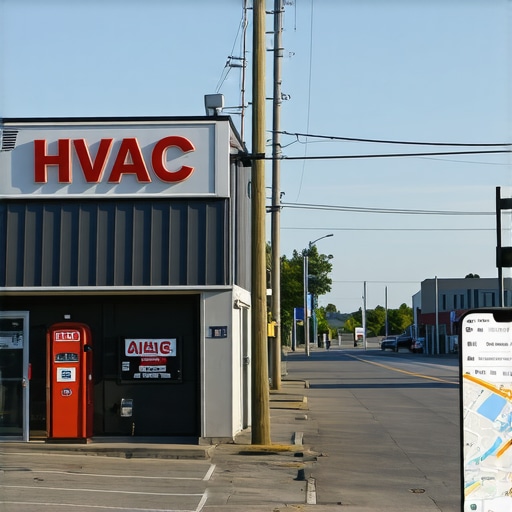
Why Your HVAC Shop Is Missing from Local Map Searches Two Towns Over: Breaking the Proximity Barrier
You own a successful HVAC business in Town A. Your trucks are clean, your techs are NATE-certified, and your local reputation is stellar. However, when a homeowner in Town B – just ten miles down the road – searches for “AC repair near me,” your business is nowhere to be found in the Google Map Pack. Instead, they see a competitor who might have fewer reviews and a worse website, but happens to be physically located three blocks away from the searcher.
This is the Proximity Paradox. It is the single most frustrating hurdle for Service Area Businesses (SABs) in the home services industry. You have the capacity to serve the entire county, but Google treats your business as if it’s tethered to a pole in your parking lot. In the world of google business profile seo, this phenomenon is known as the “Digital Leash.”
Section 1: The Proximity Paradox and the Digital Leash
The core of the issue lies in how Google’s local algorithm functions. According to Google’s own documentation, local rankings are determined primarily by three factors: Proximity, Relevance, and Prominence. For HVAC contractors, proximity is often the “heavy hitter” that outweighs the others, even if you are more relevant and prominent than the shop next door to the customer.
The “Digital Leash” refers to the fact that Google anchors your ranking potential to the physical address used for your Google Business Profile (GBP) verification. Even if you are a Service Area Business and have “hidden” your address to comply with Google’s guidelines, the algorithm still uses that hidden data point as the center of your “ranking bubble.” As the searcher moves further away from that center point, your visibility drops off a cliff. This is why Why your service trucks are in one town but your Google ranking is stuck in another – Google simply doesn’t trust that you are the best option for a customer 15 miles away when there are closer options available.
To break this leash, you must understand that improve google maps ranking outcomes require more than just a verified profile; they require a technical strategy that proves your physical presence in those neighboring towns through digital signals.
Section 2: Why Google “Hides” Service Area Businesses
Google has a complicated relationship with Service Area Businesses. Unlike a pizza shop or a hair salon, an HVAC company doesn’t usually have customers coming to their office. You go to them. However, Google’s local interface was originally built for storefronts. Over the years, the algorithm has become hyper-sensitive to SABs because of the sheer volume of spam in the industry.
Google removes over 7 million fake profiles annually. Many of these are “lead gen” sites that use residential addresses or P.O. boxes to try and capture leads in multiple cities. Because of this, Google’s “Opossum” and “Hawk” updates were designed to filter out businesses that appear to be gaming the system. If your business is located in Town A, and you try to claim you serve Town B without providing localized proof, the algorithm may “hide” you to prevent search results from being cluttered with businesses that aren’t truly local to the searcher.
Effective google business profile optimization involves more than just selecting a 20-mile service radius in your settings. Google views that setting as a “suggestion,” not a command. To actually rank, you need to overcome the algorithm’s inherent bias toward physical proximity by boosting your Relevance and Prominence to such a degree that Google feels obligated to show you to the user. This is where a professional google maps ranking service becomes essential for HVAC shops looking to scale.
Section 3: The 3 Pillars of Expanding Your Map Radius
If you want to rank two towns over, you have to stop thinking about your website as a digital brochure and start thinking about it as a local authority engine. There are three technical pillars to expanding your reach:
1. Hyperlocal Content and Visual Proof
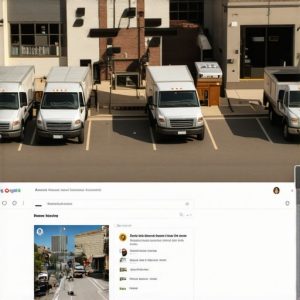
Google’s AI can now “read” images to understand context and location. If all the photos on your GBP are of your office or generic stock photos of air conditioners, you aren’t giving Google any reason to associate you with Town B. You need to provide visual evidence of your work in the target area. This is Why Posting Photos of Your Actual Service Vans Boosts Your Ranking on Google Maps. When you upload a photo of a van parked in front of a recognizable landmark in a neighboring town, or a photo of a completed install with geo-metadata from that town, you are providing “Relevance” that counters the “Proximity” deficit.
2. City Landing Pages: The Bedrock of Local Ranking
Your homepage cannot rank for every town you serve. You need dedicated city page seo strategies. Each town in your service area should have a unique landing page on your website. These pages shouldn’t just be “copy-paste” versions of each other with the city name swapped out. They need to include local testimonials, mention local neighborhoods, and provide helpful information specific to that area’s climate or common housing types (e.g., “Common AC issues in [Town B]’s historic homes”).
3. Local Schema Markup
Schema is the “Invisible Code” that speaks directly to search engines. By using LocalBusiness and ServiceArea JSON-LD schema, you can explicitly tell Google which zip codes you serve. This technical layer helps bridge the gap between your physical office and your service area. For a deep dive into how this works, read about The Hidden Code That Shows Your HVAC Services to Homeowners in the Next Town Over.
Service area businesses face a critical paradox: rankings are anchored to verification addresses, but by using hyperlocal seo tactics, you can stretch that anchor further than your competitors.
Section 4: Technical Fixes: Breaking the “Digital Leash”
To move the needle, you need to move beyond basic SEO. You need to audit your current standing using local seo tools. A google business profile audit tool like the one provided by SEO Viper Tools can show you exactly where your “ranking heat map” ends. If you see a hard line where your rankings drop from #1 to #20, you know exactly where the “Digital Leash” is pulling tight.
One of the most overlooked technical fixes is NAP (Name, Address, Phone) consistency. For HVAC companies, this often fails when businesses use different tracking numbers for different towns or have slight variations in their address across the web. Even a minor discrepancy can cause Google to lose trust in your location data. Furthermore, you must ensure that The Invisible Code That Tells Google Exactly Where Your HVAC Trucks Are (your GPS data and geo-tagged photos) matches the service area claims on your profile.
If you are struggling to gain traction, a google maps ranking service can help implement advanced tactics like “Map Embeds” on your city pages and “Geo-targeted” backlink building. These signals act as “digital breadcrumbs” that lead Google’s crawlers from Town A to Town B, proving your business is a legitimate local entity in both locations.
Additionally, stop relying on your own office computer for rank tracking. Local results are highly individualized. Why checking your own Google Maps ranking from the shop gives you fake results is a common pitfall; your browser history and physical proximity to your own router will always make you look like you’re #1, even if you’re invisible to the rest of the world.
Section 5: The Role of Reviews and “Prominence”
Reviews are the lifeblood of google business profile ranking, but not all reviews are created equal. If you want to rank in Town B, a review from a customer in Town A helps your overall “Prominence,” but it does little for your “Relevance” in Town B.
The secret to google maps lead generation in neighboring towns is getting reviews that mention the city name. When a customer writes, “Climate Masterz did a great job on our furnace repair in [Town B],” Google’s NLP (Natural Language Processing) associates your business name with that specific geography. This is a powerful signal that tells the algorithm, “This business is active and trusted in this specific location,” effectively extending your ranking radius.
Encourage your technicians to ask for reviews specifically when they are finishing a job in your “expansion” towns. A cluster of 10 reviews from Town B can often do more for your rankings in that town than 50 reviews from your home base. This is how you build geo targeted seo authority that the “Digital Leash” cannot easily restrict.
Section 6: Common Pitfalls & How to Avoid Suspension
In the rush to rank google business profile listings in multiple towns, many HVAC owners turn to “black hat” tactics. This is a dangerous game. Google suspends over 1 million businesses annually for GMB risk factors, including “suspicious activity” or “circumventing location requirements.”
Avoid these common mistakes:
- Virtual Offices: Using a Regus or WeWork address in Town B is an express ticket to suspension. Google knows these addresses and flags them.
- Keyword Stuffing: Changing your business name to “Best HVAC Repair Town B” when your legal name is “Smith Heating & Air” will get you banned.
- Spammy Backlinks: Why buying backlinks to your Google profile is the fastest way to get shadowbanned – Google’s algorithm is smart enough to recognize unnatural link patterns that don’t originate from local, relevant sources.
Stick to “white hat” local map pack seo strategies that focus on real-world signals, authentic customer interactions, and high-quality technical website optimization.
Section 7: Conclusion & Call to Action
Ranking your HVAC shop in the next town over isn’t a matter of luck; it’s a matter of out-performing the proximity algorithm through technical relevance and hyperlocal prominence. By breaking the “Digital Leash” with city pages, geo-tagged content, and localized reviews, you can expand your reach and dominate the local map pack seo landscape.
Ready to see where your business actually stands? Use a google business profile audit tool to map your current visibility. If you’re ready to stop being invisible to homeowners just a few miles away, contact Local Grow 360 today for a custom maps seo campaign. Let us help you turn your service trucks into mobile ranking engines.