Why checking your own Google Maps ranking from the shop gives you fake results
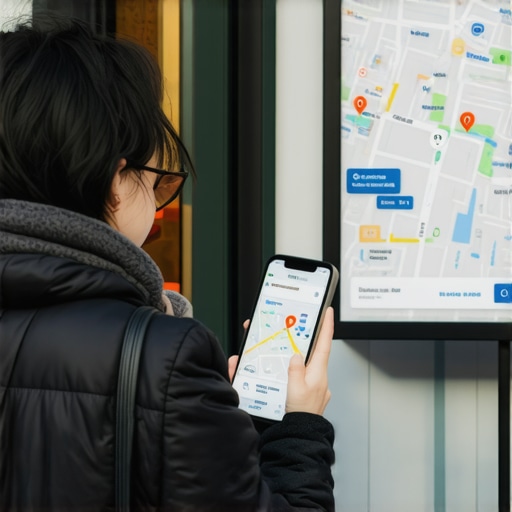
It’s 8:00 AM on a Tuesday. You’re sitting in your HVAC shop, coffee in hand, wondering why the phones aren’t ringing as much as they did last year. You pull out your phone, open Google, and type in “AC repair near me” or “furnace installation.” There you are – Number 1 in the Map Pack. You breathe a sigh of relief, convinced that your digital presence is dominant. But here’s the cold, hard truth: You are looking at a lie.
As a Google Business Profile (GBP) Product Expert, I see this scenario play out daily. Business owners mistake their personal search results for the objective reality of the market. In the world of Local SEO, what you see from your office chair is what we call the “Office Bubble.” Because of a phenomenon known as Proximity Bias, your ranking at your physical location is almost always a distorted version of the truth. If you want to know why is my google business profile not ranking for the customers who actually need you, you have to look past your own screen.
Section 1: The “Office Bubble” Illusion
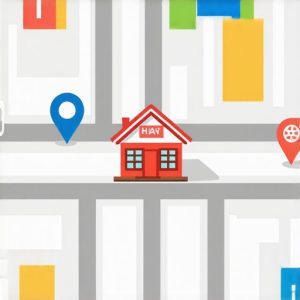
Google’s primary objective is to provide the most convenient, relevant result for the user. When you search for your own services while sitting inside your shop, Google knows exactly where you are. You are zero feet away from your own business pin. Naturally, Google thinks, “This is the most convenient option for this user,” and places you at the top of the list. This is the essence of Proximity Bias.
This creates a dangerous SEO illusion. You see yourself at #1, so you assume your SEO strategy is working perfectly. Meanwhile, a homeowner just three miles away – in a high-value neighborhood you’re desperate to break into – is seeing your competitor at #1 and you at #14. Because you aren’t seeing what they see, you aren’t making the necessary adjustments to your google business profile seo.
Google’s official documentation states that local results are based primarily on three factors: relevance, distance, and prominence. When you search from your office, the “distance” factor is weighted so heavily that it overrides everything else. You could have a terrible website, zero reviews, and no photos, and you would likely still rank #1 for yourself. This is why many business owners find that Why Most Local SEO Tools Are a Total Waste for Small HVAC Shops; they don’t account for the hyper-local nature of these searches.
Section 2: The Science of Proximity, How Google Tracks You
How does Google know you’re sitting at your desk? It’s more than just your GPS. Google uses a sophisticated cocktail of data points to pin your location with frightening accuracy. This includes your IP address, Wi-Fi triangulation (scanning the MAC addresses of nearby routers), and historical location data from your mobile device. Even if you turn off location services on your phone, Google can often estimate your position based on the cell towers you’re pinging.
When you are at “Ground Zero” – the physical address listed on your Google Business Profile – you are the ultimate “relevant” result for a distance-based query. Research has shown that a business located two miles from a searcher will often outrank a company with a stronger website if Google believes the nearby option is more convenient. This is why a google maps ranking service is so essential; it allows you to see how that proximity drops off as you move away from your shop.
Think of proximity as a physical weight on a scale. When you are at your shop, the weight of “distance” is so heavy it tips the scale in your favor every single time. But as you move a mile east or two miles west, that weight disappears. Suddenly, you have to rely on “relevance” and “prominence” to stay in the Map Pack. If those two pillars aren’t strong, you will vanish from the search results the moment you leave your parking lot.
Section 3: The “Geo-Grid” Reality Check
If searching from your office gives you “fake” results, how do you see the “real” ones? The answer lies in geo-grid technology. In the past, SEOs would track rankings based on a single point – usually the center of a city. But that’s not how Google Maps works. Rankings are fluid; they change every few blocks, sometimes every few feet.
A “Rank #1” claim is completely meaningless unless it’s attached to a specific coordinate. This is where local seo ranking tools like SEO Viper Tools come into play. Instead of giving you a single number, a geo-grid tool provides a heatmap over your entire service area. It might show you as #1 at your shop, but #8 near the local shopping mall, and #15 in the neighboring suburb. This is the only way to get a “real” look at the map.
Without this data, you are flying blind. You might think you’re dominating your city, but you’re actually only dominating your street. This discrepancy is often the reason Why your service trucks are in one town but your Google ranking is stuck in another. To fix this, you must stop relying on manual searches and start using a dedicated google maps rank tracker that can simulate searches from various GPS coordinates across your entire service territory.
Section 4: Why Service Area Businesses (SABs) Have it Harder
For HVAC contractors, plumbers, and roofers, the challenge is even steeper. Many of these businesses operate as Service Area Businesses (SABs), meaning they don’t have a storefront where customers visit. Even if you hide your address on your GBP, Google still uses a “central point” – usually your home or a small office – to calculate your proximity.
SABs often face what I call the “Proximity Wall.” Because you don’t have a physical storefront to draw people in, Google is sometimes more hesitant to show you far away from your verified location. You are essentially fighting an invisible battle against competitors who might be physically closer to the high-value neighborhoods you want to serve. If you aren’t careful, your visibility can be restricted to a tiny radius around your home office, regardless of how large your service area is set in the GBP dashboard.
To overcome this, you need to understand The Hidden Code That Shows Your HVAC Services to Homeowners in the Next Town Over. This involves more than just checking boxes; it requires building local signals that prove to Google you are active and prominent in those outlying areas, even if your “pin” is miles away.
Section 5: Beyond Proximity, How to Actually Expand Your Reach
If proximity is the “fake” result you see at the office, how do you win the “real” results further away? You have to master the other two pillars of the algorithm: Relevance and Prominence. Since you can’t change your physical distance from a customer (unless you open more locations), you must make your business so relevant and so prominent that Google feels obligated to show you, even if a competitor is closer.
1. Google Business Profile Optimization
Your profile needs to be a complete resource. This means more than just a phone number. You need to utilize google business profile optimization techniques that include selecting the correct primary and secondary categories. If you get this wrong, you’re invisible. For example, Why Picking the Wrong Google Business Categories Is Hiding Your HVAC Shop is a common pitfall that limits your reach before you even start.
2. High-Quality, Geo-Tagged Media
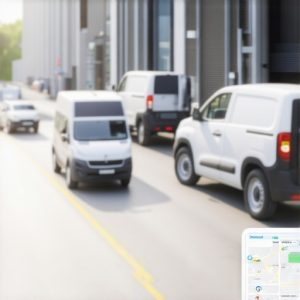
Google’s AI can “see” what is in your photos. If you only post stock photos, you aren’t building any local trust. However, Why Posting Photos of Your Actual Service Vans Boosts Your Ranking on Google Maps is a game-changer. When you upload a photo of your branded van in a specific neighborhood, you are providing Google with visual proof of your local activity. Use a google business profile audit tool to ensure your media is performing as it should.
3. Review Velocity and Diversity
Reviews and authority can extend your reach significantly. A business with 500 5-star reviews and a high “review velocity” (getting new reviews consistently) will often “break” the proximity circle. Google views these businesses as “Prominent.” If a user is looking for the best HVAC company, Google will show them a highly-rated company 5 miles away over a poorly-rated company 1 mile away.
4. Local Backlinks and Citations
To rank higher on Google Maps, your website needs to be an authority in your specific geographic area. This means getting links from local chambers of commerce, sponsoring local little league teams, and ensuring your NAP (Name, Address, Phone Number) is consistent across the web. These are the “Prominence” signals that tell Google you are a pillar of the community.
Section 6: Conclusion & The 2026 Outlook
As we move through 2026, the Google Maps algorithm is more volatile than ever. We are seeing businesses drop in and out of the Map Pack with no warning, even when their reviews are perfect. This “unstable” factor is a result of Google constantly tweaking the weight of proximity versus prominence. In this environment, relying on a manual search from your office isn’t just lazy – it’s bad for business.
The “Office Bubble” is a comfort zone that leads to stagnation. If you want to grow your HVAC or home service business, you must confront the reality of your geo-grid. Stop searching from your phone and start using professional local seo software to monitor your changes. By understanding the three pillars of local seo ranking factors – Relevance, Distance, and Prominence – you can stop chasing “fake” results and start generating real leads.
Don’t be the owner who thinks they are winning because they see themselves at #1 at the shop. Be the owner who knows they are winning because they can see their green #1 pins spread across the entire county on a google maps rank tracker. The truth is out there, but you won’t find it sitting at your desk.
About the Author: Kevin Pauls is a Local SEO Consultant and Google Business Profile Product Expert. With years of experience in the trenches of local search, Kevin helps businesses and agencies navigate the complexities of the Map Pack to improve visibility and drive real-world results.