The Smell of a Scam: Why Your AC Isn’t Actually Dying
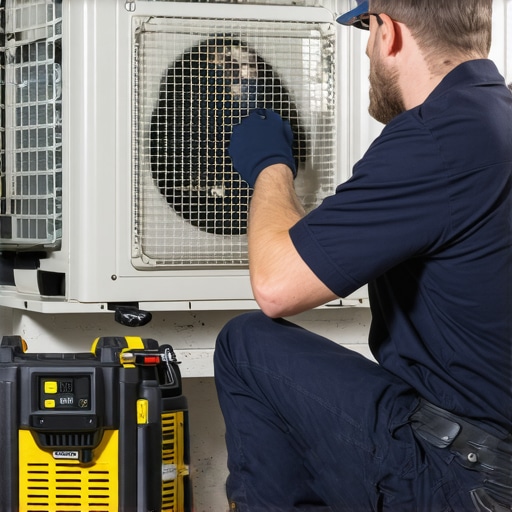
You can smell a compressor burnout from the driveway. That acidic, acrid stench tells you the motor windings have turned the POE oil into a toxic soup, and the system is toast. But 90% of the time, I walk up to a unit and don’t smell a thing. Last July, I followed one of those ‘Comfort Advisors’—a kid in a pristine white polo who didn’t have a single smudge of pookie on his hands—to a job where he’d quoted $18,000 for a full AC installation. He told the homeowner her R-410A system was ‘illegal’ to repair because of the 2025-2026 EPA phase-outs. Total garbage. I found a $40 contactor with pitted points and a lizard fried across the terminals. Twenty minutes and a bit of sandpaper later, the juice was flowing, and the house was dropping toward beer can cold. This is the ‘Regulatory Cliff’ we’re facing, and if you don’t know the physics, you’re going to get bled dry by a sales tech looking for a commission.
“Properly sized equipment shall be selected based on the total sensible and latent load.” – ACCA Manual J
Secret 1: The R-410A Inventory Fire Sale vs. The A2L Future
We are currently in the middle of the biggest refrigerant transition in thirty years. The EPA is phasing out R-410A (Puron) in favor of A2L refrigerants like R-454B and R-32. These new gases are ‘mildly flammable,’ which means the 2026 units require leak sensors, specialized control boards, and explosion-proof electrical components. This has sent the price of equipment through the roof. A sales tech will tell you that you must buy now to avoid the ‘fire hazard’ or that you must buy the new 2026 tech to be ‘green.’ Here is the reality: R-410A isn’t disappearing overnight. We will be doing furnace repair and heating service on these units for the next two decades. The secret? If your current coil is solid, don’t let them scare you into a $15,000 A2L swap-out just because of a minor leak that a tin knocker could fix with a torch and some silver solder.
Secret 2: Static Pressure is the Silent Killer
Most ‘bad units’ are actually just victims of bad ductwork. If you put a 5-ton unit on a 3-ton duct system, you are strangling the machine. This is sensible heat vs. latent heat 101. In our humid climate, we need the air to move slowly enough across the evaporator coil to reach the dew point. This removes the moisture (latent heat). If the static pressure is too high because your ducts are undersized, the air whistles through, the coil freezes, and the compressor slugs liquid gas until the valves shatter. Before you agree to a new AC installation, demand a static pressure test. If the tech doesn’t know what a manometer is, kick them off your property. You can’t cool what you can’t touch, and if the air isn’t moving right, the most expensive Trane or Carrier in the world is just a giant paperweight.
“The most expensive equipment in the world cannot overcome a bad duct system.” – Industry Axiom
Secret 3: The 500-Micron Myth
When a tech installs a new system or performs a mini-split setup, they have to evacuate the lines. Most guys pull a vacuum until the needle drops and then stop. That’s bush league. To truly protect the system from the 2026 price hikes, you need a deep vacuum—down to 500 microns. Moisture is the enemy of POE oil. If there is a single drop of water left in those copper lines, it combines with the refrigerant to create hydrofluoric acid. That acid eats the motor windings from the inside out. If your tech isn’t using a digital micron gauge, he’s setting a timer on your system’s death. A proper vacuum takes time, and sales-focused companies hate taking time.
Secret 4: Inverter Tech and the Mini-Split Trap
Variable-speed ‘inverter’ compressors are the darlings of the 2026 push. They are efficient, sure, but they are also packed with proprietary circuit boards that cost $2,000 a pop. If you live in an area with frequent lightning or dirty power from the sparky down the street, these boards will fry. A standard single-stage unit is a tank—it’s easy to fix, parts are everywhere, and any tech worth his salt can get it running at 2 AM on a Sunday. Before you get upsold on a 25-SEER2 hyper-efficient mini-split, ask yourself if the 10-year energy savings will actually cover the cost of one out-of-warranty inverter board. Usually, the math doesn’t add up.
Secret 5: Manual J or No Pay
If a contractor walks into your house, looks at the old unit, and says, ‘Yep, you need a 4-ton,’ they are lying to you. This is ‘Rule of Thumb’ engineering, and it’s why your upstairs is always ten degrees hotter than your downstairs. A real pro performs a Manual J Load Calculation. They measure windows, insulation R-values, and ceiling heights. In the humid South, an oversized unit is actually worse than an undersized one. An oversized unit ‘short-cycles,’ meaning it hits the temperature setpoint so fast it never runs long enough to pull the humidity out of the air. You end up with a house that’s 70 degrees but 75% humidity—a cold, clammy swamp. Don’t pay for an AC installation unless they show you the math.