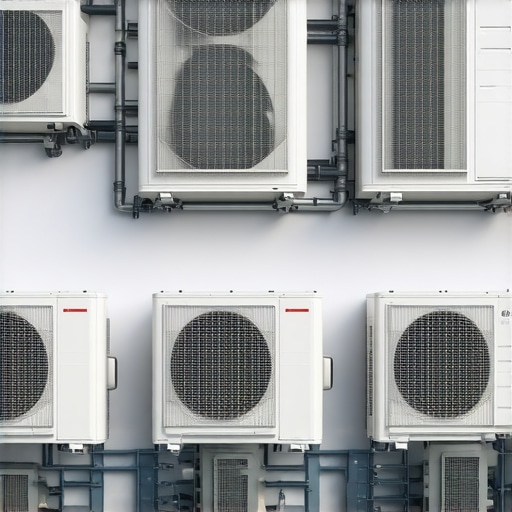
The Death of R-410A and the High Cost of Ignorance
Listen, if you are looking for a glossy sales pitch about ‘whisper-quiet’ fans, you are in the wrong place. I have spent thirty years crawling through blown-in insulation that sticks to your sweat like a second skin, and I have seen more compressors die early deaths than I care to count. We are standing on the edge of a regulatory cliff. As of 2025 and 2026, the HVAC industry is shifting away from R-410A—the juice we have used for decades—and moving toward A2L refrigerants like R-454B and R-32. This isn’t just a change in the gas; it is a change in the entire thermodynamic architecture of your home. If your AC installation technician doesn’t understand the physics of latent heat or the ‘mildly flammable’ nature of these new systems, you aren’t buying a cooling system—you’re buying a five-figure boat anchor.
“The most expensive equipment in the world cannot overcome a bad duct system.” — Industry Axiom
I followed a ‘Sales Tech’ last week—one of those guys who spends more time on his hair than his manifold gauges. He had quoted a homeowner twenty grand for a top-of-the-line inverter system because the old unit was ‘shat.’ I walked in, pulled the service panel, and found a $45 contactor with pitted points and a return air plenum that was sucking in 140-degree attic air through a hole the size of a dinner plate. He wanted to replace the heart when the patient was just dehydrated. This is why you need to understand the tweaks that actually matter for 2026 cooling costs. We aren’t just moving air; we are managing energy states.
1. The Inverter Leap: Why the Mini-Split Logic is Winning
Traditional AC installation relies on a ‘bang-bang’ controller. The thermostat calls for cooling, the contactor slams shut, and the compressor screams to life at 100% capacity. It’s like driving a car where the only two options are ‘neutral’ and ‘floored.’ This causes massive electrical surges and, more importantly, it fails to address humidity. In a humid climate like the Southeast, a single-stage unit cools the air too fast, hits the setpoint, and shuts off before it can pull the moisture out of the air. You end up with a house that is 72 degrees but feels like a damp basement.
By 2026, the only way to keep cooling costs down is through variable-speed or mini-split technology. These units use inverters to slow the compressor down to a crawl. By running longer at a lower speed, the evaporator coil stays consistently below the dew point. This is Thermodynamic Zooming: we are focusing on the phase change of water vapor into liquid condensate. When you remove that latent heat, 75 degrees feels like 70. You save money because the unit isn’t constantly overcoming the ‘startup’ inertia that eats electricity for breakfast.
2. Static Pressure: The Silent Killer of Efficiency
You can buy a SEER2 20-rated unit, but if your tin knocker didn’t size the ducts right, you might as well be throwing money into the condenser fan. Most residential ductwork is undersized. When you push too much air through a small pipe, the ‘static pressure’ rises. This makes the blower motor work twice as hard and creates ‘duct turbulence’ that kills your efficiency. During a heating service or AC overhaul, I always check the Total External Static Pressure (TESP). If it’s over 0.5 inches of water column, your system is suffocating.
The tweak for 2026 is simple: Increase the return air volume and seal every joint with Pookie (mastic). Don’t use that silver ‘duct tape’—it’s garbage that dries out in three years. Mastic creates a permanent, airtight seal. If you are leaking 15% of your conditioned air into the crawlspace, you are paying the utility company to cool the spiders. Proper duct sealing is the difference between a system that lasts 20 years and one that burns out a sparky-installed capacitor every August.
3. The A2L Transition and Sensor Integration
The new refrigerants coming in 2026 are categorized as A2L. This means they have a lower global warming potential, but they are technically ‘mildly flammable.’ Don’t panic—you aren’t living on a bomb—but the AC installation process now requires leak detection sensors and specific mitigation boards. If these aren’t calibrated correctly, your system will ‘nuisance trip,’ shutting down your cooling in the middle of a heatwave because it thinks it smells a leak.
A critical tweak is ensuring your installer uses a digital vacuum gauge to pull the system down to 500 microns. In the old days, guys would ‘triple evacuate’ and call it a day. With these new oils and gases, any moisture left in the line set will react with the refrigerant to create acid. That acid eats the motor windings from the inside out. You’ll hear a screeching bearing, then a pop, and then the sour, metallic smell of a burnout. By 2026, precision in the vacuum process isn’t optional; it’s the only way to protect your investment.
“Designers shall use Manual J to calculate heat loss and heat gain to ensure equipment is sized to the actual load of the structure.” — ACCA Standard 5
4. Sensible vs. Latent Heat Management
If you are in a high-heat zone, you have to realize that ‘cooling’ is actually ‘heat removal.’ In a dry climate, we worry about sensible heat—the temperature you see on the thermometer. But in humid zones, latent heat is the real enemy. A furnace repair in the winter might focus on the heat exchanger, but in the summer, your furnace’s blower is the heart of your dehumidification. The 2026 tweak is to install a ‘whole-house’ dehumidifier integrated into the primary plenum. This allows the AC to focus on the sensible temperature while the dehumidifier handles the moisture load. It prevents the ‘short cycling’ that kills compressors and allows you to set your thermostat higher while maintaining better comfort.
The Bottom Line on 2026 Costs
The days of ‘cheap’ AC installation are dead. Between the new A2L sensors, the specialized gas, and the more complex inverter boards, the entry price is going up. You cut your costs not by finding the cheapest contractor, but by finding the one who treats airflow like a science. If they don’t bring out a manometer to check your static pressure, show them the door. If they tell you that a 5-ton unit is better than a 3-ton because ‘bigger is better,’ they are a sales tech looking for a commission, not a technician looking to save you money. Physics doesn’t care about marketing; it only cares about pressure, temperature, and flow.