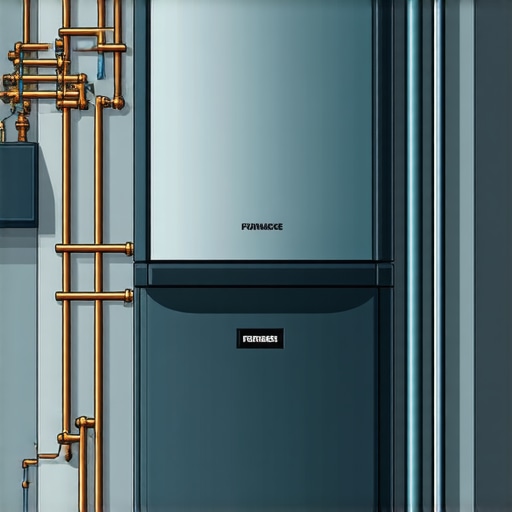
The Anatomy of a Scream: Why Your Heating System is Whistling
You’re sitting in your living room in the dead of January, the windows are frosted over, and suddenly, it starts. A high-pitched, piercing whistle that sounds like a tea kettle from hell. Most homeowners think it’s just ‘the house settling’ or ‘old age,’ but after thirty years of hauling tool bags into crawlspaces, I can tell you exactly what that sound is: it’s your furnace gasping for air. In the HVAC trade, we call this a high static pressure event, and it’s the number one killer of expensive blower motors. By 2026, with the new high-efficiency standards kicking in, these systems are more sensitive than ever. If you don’t address that whistle, you aren’t just losing sleep; you’re burning through the lifespan of a $10,000 investment.
The Mentor’s Physics Lesson: Why Airflow is King
My old mentor, a grizzled tin knocker named ‘Big Al’ who could smell a gas leak from a block away, used to grab me by the shoulder and scream, ‘You can’t heat what you can’t touch!’ He was right. Most guys in this industry are ‘Sales Techs’—they want to swap your capacitor and charge you five hundred bucks, or worse, tell you that you need a whole new AC installation or furnace when the problem is purely aerodynamic. Al taught me that a furnace is a thermodynamic engine. It relies on the mass flow rate of air to move BTUs from the heat exchanger into your rooms. When that airflow is restricted, the velocity increases. Think of it like putting your thumb over the end of a garden hose. The pressure builds, the speed of the water (or air) skyrockets, and you get that characteristic whistle.
“The most expensive equipment in the world cannot overcome a bad duct system. Static pressure is the silent killer of efficiency.” – Industry Axiom
Reason 1: The Return Air Starvation (The Vacuum Effect)
The most common reason a furnace whistles in 2026 is a lack of return air. Modern furnaces use ECM (Electronically Commutated Motors) which are designed to maintain a constant CFM (Cubic Feet per Minute) regardless of the resistance. If your return duct is too small—a common sin committed by ‘trunk-slammers’ who did the original heating service—the motor ramps up its RPM to compensate. As it tries to suck air through a straw, it creates a vacuum whistle at the filter rack or the return drop. You’ll notice the sound gets louder when you put in a high-MERV ‘allergy’ filter. Why? Because you’ve just increased the static pressure. Furnace repair in this case isn’t about replacing parts; it’s about ‘Thermodynamic Zooming.’ We have to analyze the latent heat transfer. If the air can’t cross the heat exchanger fast enough, the ‘delta T’ (temperature rise) gets too high, the limit switch trips, and you’re left in the cold. The fix? Sometimes it’s as simple as adding a second return or a larger filter grille to let the beast breathe.
Reason 2: The ‘Harmonica’ Duct Gap and the Pookie Solution
Sometimes the whistle isn’t coming from the furnace itself but from the ductwork. I call this the Harmonica Effect. When air moves at a high velocity through a tiny gap—maybe a joint that wasn’t sealed properly by a lazy tin knocker—it vibrates the metal edges. This is why I despise ‘silver tape.’ Over five years, the adhesive dries out, the tape peels, and you’ve got a leak. Real pros use ‘Pookie’ (mastic). If you find a whistle, take a piece of incense or a smoke pen and run it along the seams of your plenum. If the smoke gets sucked in or blown away violently, you’ve found your culprit. Slather that joint in mastic, let it cure, and the whistle dies. This is especially critical if you have a mini-split transition or a multi-zone system where dampers are constantly shifting the air pressure around.
Reason 3: Oversized Blowers and the Venturi Effect
By 2026, we’re seeing a lot of ‘mismatched’ systems. A homeowner gets a high-SEER2 AC installation but keeps their old, undersized ductwork. The new blower is a powerhouse designed for 1,600 CFM, but the ducts can only handle 1,000. This creates the Venturi Effect. As the air is forced through the narrow ‘throat’ of the supply plenum, the pressure drops and the velocity spikes, creating a localized whistle right at the furnace outlet. This isn’t just annoying; it’s dangerous. High velocity air causes ‘flame rollout’ or can even crack a heat exchanger due to uneven cooling. If you hear a whistle that sounds like it’s coming from inside the cabinet, you might have a manifold pressure issue or an oversized blower setting that a Sparky or a qualified tech needs to adjust on the control board.
“Failure to provide adequate combustion air or maintain proper static pressure can result in incomplete combustion and the premature failure of heat exchangers.” – NFPA 54 / ANSI Z223.1
The 2026 Math: Repair vs. Replace
When you’re staring down a $1,200 furnace repair for a failed blower motor caused by years of whistling/static pressure, you have to do the math. A new, properly sized system might cost $8,000 to $12,000, but it will save you 30% on your ‘gas’ or ‘juice’ (refrigerant/electric) bills. However, if your tech doesn’t address the ductwork issues that caused the whistle in the first place, your brand-new unit will be dead in five years. Don’t let a ‘Sales Tech’ bully you into a new unit without a manometer test. A real tech will show you the static pressure readings. Anything over 0.5 inches of water column on a standard residential system is a red flag. If they don’t know what a manometer is, kick them out of your mechanical room.
Conclusion: Physics Doesn’t Lie
Comfort isn’t some magic spell; it’s pure physics. That whistle is a warning sign that your system is working too hard for too little reward. Whether it’s sealing gaps with Pookie, enlarging your return air, or slowing down a hyperactive blower, fixing the airflow is the only way to ensure your home stays warm without breaking the bank. Don’t ignore the scream—it’s the only way your furnace knows how to tell you it’s dying.