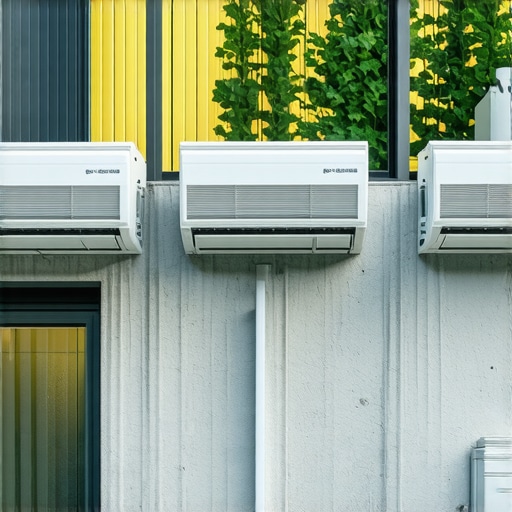
The 2026 Regulatory Cliff: Why Your Utility Bill is About to Explode
If you are still nursing a twenty-year-old R-22 dinosaur or even a ‘modern’ R-410A unit, you are standing on the edge of a financial canyon. By 2026, the HVAC industry won’t just look different; it will be unrecognizable. The EPA is pushing the transition to A2L refrigerants—like R-454B and R-32—which are ‘mildly flammable.’ This means every new AC installation will require leak sensors, more complex control boards, and higher price tags. I’ve spent three decades in the field, and I’ve seen every ‘game-changing’ refrigerant come and go, but this shift is different. It’s the death of the cheap fix. If you want to keep your power bills from looking like a mortgage payment, you need to understand the physics of why your current furnace repair or bloated central air system is failing you.
The Sales Tech Scam: A Case of Ghost Parts and Inflated Quotes
I followed a ‘Comfort Advisor’—that’s the fancy name for a salesman in a polo shirt—into a home last month. He had quoted a family $22,000 for a full system replacement because their inducer motor was ‘obsolete.’ He didn’t even pull his multimeter out of the bag. I looked at the unit, found a loose spade connector on the pressure switch, and had the heat running in five minutes. But here’s the kicker: even though I fixed that furnace, the house was still a thermodynamic nightmare. It was a 1970s build with ductwork that looked like a ‘tin knocker’ had a fever dream. The master bedroom was a meat locker while the kitchen felt like a kiln. I told them, ‘You don’t need a $22,000 ducted headache; you need to stop trying to push air through a straw.’ That’s where the mini-split comes in. It’s surgical. It’s physics. It’s not trying to fight the friction loss of 50 feet of leaky, uninsulated ductwork.
“The most expensive equipment in the world cannot overcome a bad duct system.” – Industry Axiom
Thermodynamic Zooming: How Mini-Splits Kill Latent Heat
In the humid South, your enemy isn’t just the temperature on the thermostat (sensible heat); it’s the moisture in the air (latent heat). A standard ‘bang-bang’ central unit turns on, blasts the house with cold air, hits the setpoint, and shuts off. It cools the air fast, but it doesn’t run long enough to pull the moisture out. You end up in a ‘cold swamp’—sticky, clammy, and miserable. A mini-split uses an inverter-driven compressor that never truly shuts off. It ramps down to a whisper, keeping the evaporator coil temperature consistently below the dew point. This constant, low-speed airflow allows the coil to wring out the humidity like a sponge, lowering the latent load without over-cooling the room. You feel more comfortable at 75°F with 45% humidity than you do at 70°F with 65% humidity. That 5-degree difference is where your 2026 power savings live.
Solution 1: The Multi-Zone Hyper-Heat Inverter
For homes currently relying on ancient boilers or electric baseboard heat, the Hyper-Heat mini-split is the ultimate heating service upgrade. Traditional heat pumps give up when the mercury hits freezing because there isn’t enough ‘juice’ (refrigerant) density to pull heat from the outside air. These new systems use flash-injection technology to maintain 100% heating capacity down to 5°F. You’re essentially moving heat rather than creating it with expensive electric strips or gas. It’s the difference between using a heat pump to move energy and using a furnace to burn money.
Solution 2: The Concealed Duct Mini-Split (The Hybrid Approach)
If you hate the look of ‘wall warts’ (indoor heads), the concealed duct mini-split is the answer. We tuck a small air handler in the attic or crawlspace, serving two or three close-proximity vents. You get the efficiency of an inverter without the aesthetic compromise. This is where the ‘sparky’ and the ‘tin knocker’ have to actually coordinate. Because the static pressure on these units is low, your duct runs have to be perfect. No kinks, no ‘pookie’ (mastic) slapped over holes, just clean, short runs that deliver high-velocity air exactly where it’s needed. It bypasses the 30% energy loss typical of leaky central duct systems.
Solution 3: Solar-Ready DC Inverters
By 2026, the smartest move for AC installation is the DC-powered mini-split. These units can take raw DC power directly from solar panels during the day, bypassing the inverter loss of a whole-home solar system. In high-demand zones like Texas or Arizona, where the sun is trying to cook your capacitors at 3 PM, these units run for free. Even if you aren’t on solar yet, the internal DC motors are 40% more efficient than the old AC induction motors found in your current furnace blower.
“Design of the air distribution system is as critical as the selection of the heating and cooling equipment.” – ACCA Manual D
The Smell of Failure and the Cost of Neglect
I can walk into a mechanical room and tell you if a compressor is about to die just by the smell. If it’s got that acidic, sour tang, your oil is contaminated and your ‘gas’ is turning into a solvent. Mini-splits are sensitive. You can’t just ‘top them off’—they are critically charged systems. If a ‘Sales Tech’ tells you that you just need a little more R-410A, he’s lying to you or he’s lazy. You have a leak. Finding that leak and sealing it is the difference between a system that lasts 15 years and one that burns out in five. As we move into the R-454B era, maintenance isn’t optional. You need to keep those coils washed and the condensate lines clear of the ‘shmoo’ (algae) that clogs up the drains and ruins your drywall. Comfort is physics, not magic. Don’t let a salesman tell you otherwise. [{“@context”: “https://schema.org”, “@type”: “HowTo”, “name”: “How to Maintain Your Mini-Split for 2026 Efficiency”, “step”: [{“@type”: “HowToStep”, “text”: “Clear the outdoor condenser of debris and wash the fins with low-pressure water to ensure heat transfer.”}, {“@type”: “HowToStep”, “text”: “Clean the indoor reusable filters every 30 days to maintain optimal static pressure and airflow.”}, {“@type”: “HowToStep”, “text”: “Inspect the condensate drain line for blockages to prevent water damage and mold growth.”}]}]