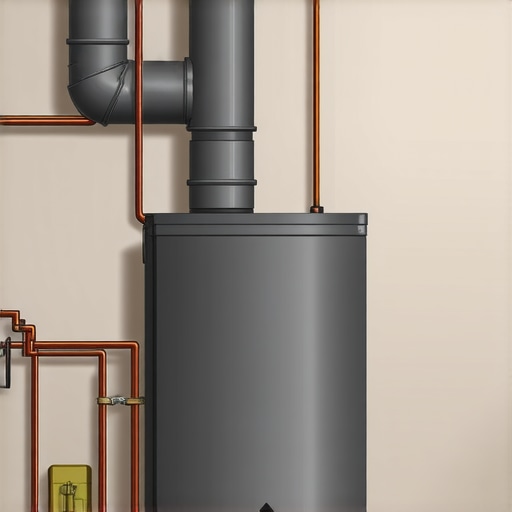
The Shiver in the Bones: When the Inducer Motor Screams
It’s 3:00 AM on a Tuesday in mid-February, and the temperature outside has plummeted to a bone-chilling 5 degrees. You’re jolted awake not by an alarm, but by the absence of a sound—the rhythmic, low-frequency hum of your furnace has been replaced by a high-pitched, mechanical screech that sounds like a banshee trapped in a tin can. That’s the sound of an inducer motor bearing giving up the ghost. Most homeowners react with panic, dialing the first number they find on a sticker, but that’s where the bleeding of your bank account starts. As a tech who’s spent thirty years crawling through spider-infested crawlspaces and sweating through my coveralls, I’ve seen the same three mistakes play out every single winter. These aren’t just small errors; in 2026, with the new efficiency standards and the skyrocketing cost of parts, these mistakes are financial landmines.
The Narrative of the ‘Cracked’ Deception
Last winter, I followed a ‘Sales Tech’—you know the type, clean fingernails, starched shirt, and a clipboard more expensive than his tool bag—who had just quoted a young family $14,000 for a full furnace and AC installation. He told them their heat exchanger was ‘critically cracked’ and that they were essentially breathing in death. He’d shut their gas off ‘for their safety’ and left them in a house that was already dropping into the fifties. When I arrived, I pulled out my combustion analyzer and a specialized borescope camera. I didn’t find a crack. What I found was a clogged condensate drain line that had backed up into the pressure switch, causing the furnace to fail its startup sequence. A $250 cleaning and a stern talk later, the heat was back on. The ‘Sales Tech’ wasn’t looking for a repair; he was looking for a commission. That’s the reality of the industry right now, and if you don’t understand the physics of your own home, you’re the perfect target.
“The most expensive equipment in the world cannot overcome a bad duct system.” – Industry Axiom
Mistake #1: The Ignored Static Pressure and the ‘Tin Knocker’ Legacy
The first mistake is thinking the furnace is an island. It’s not. It’s the heart of a circulatory system, and that system is your ductwork. In the trade, we call the guys who build these ‘Tin Knockers.’ If the tin knocker who built your house was lazy, your furnace is struggling against high static pressure. Imagine trying to run a marathon while breathing through a cocktail straw—that is what your furnace does every day if your returns are undersized. By 2026, furnaces have become so high-tech that they use ECM (Electronically Commutated Motors) which try to compensate for bad ducts by ramping up their RPMs. This doesn’t fix the airflow; it just cooks the motor and doubles your electric bill. You think you need a heating service because the air isn’t hot enough, but the reality is the ‘sensible heat’ isn’t being moved because the airflow is strangled. I’ve seen brand new 98% AFUE units die in three years because the static pressure was over 0.8 inches of water column. Before you let a sparky or a tech tell you the board is bad, make them pull out a manometer and prove the ductwork isn’t the real killer. We use ‘Pookie’ (mastic) to seal those leaks for a reason—to keep the pressure where it belongs.
Mistake #2: The Mini-Split Mirage and Thermal Imbalance
The second mistake is the improper integration of a mini-split into an existing home ecosystem. We’re seeing a massive surge in mini-split installs because they are efficient, but homeowners are using them as a band-aid for a failing central furnace. Here’s the thermodynamic truth: heat moves to cold. If you install a mini-split in a finished basement but ignore the furnace repair needed for the rest of the house, you’re creating a thermal tug-of-war. In 2026, we’re dealing with more dual-fuel systems than ever before. If your tech doesn’t understand how to set the ‘balance point’—the outdoor temperature where the heat pump stops being efficient and the gas furnace needs to take over—you are throwing money out the window. If the ‘juice’ (refrigerant) isn’t balanced perfectly in that heat pump, the compressor will slug liquid on cold starts. You’ll hear a ‘thump’ that sounds like a sledgehammer hitting the side of the house. That’s the sound of your savings evaporating.
“Design of a residential duct system shall be in accordance with ACCA Manual D.” – ASHRAE Standards
Mistake #3: The ‘Topping Off’ Scam and the 2026 Refrigerant Shift
The third mistake, and perhaps the most expensive in 2026, is falling for the ‘topping off the gas’ line. Let’s be clear: a furnace or an AC is a closed loop. If it’s low on ‘gas’ (refrigerant), there is a hole. In 2026, the transition to A2L refrigerants like R-454B has made the old R-410A incredibly expensive. If a tech tells you that you just need a couple of pounds of ‘juice’ every year, they are robbing you. That refrigerant is leaking out, turning into an acidic sludge inside your lines, and eating your ‘suction line’ from the inside out. This leads to a compressor burnout, which has a very specific, acrid, sour smell—once you smell it, you never forget it. It smells like burnt vinegar and regret. Instead of paying for a ‘top off,’ demand a nitrogen isolation test. Find the leak, fix it with a torch and some silver solder, or replace the coil. Anything else is just pouring money into a hole in the sky.
Thermodynamic Zooming: The Physics of the Heat Exchanger
To really understand why a furnace repair is so critical, you have to look at the flame rectification process. Inside your furnace, a flame sensor sits in the path of the fire. It uses the ions in the flame to complete a tiny electrical circuit—literally micro-amps of current. If that sensor is dirty, the furnace ‘thinks’ there is no fire and shuts down to prevent a gas explosion. A ‘Sales Tech’ will tell you that you need a new control board ($800). A real tech will take a piece of steel wool, clean the sensor for five minutes, and charge you for a standard service call. This is the ‘Forensic Diagnosis’—understanding that the mechanical anatomy of the system often fails at the smallest points of contact. Your furnace is a machine of heat transfer; it’s designed to drop the flue gas temperature below its dew point in high-efficiency models to reclaim latent heat. If that process is interrupted by a bad install or poor maintenance, you aren’t just losing money—you’re risking carbon monoxide poisoning from flame rollout. Don’t be the homeowner who ignores the ‘panting’ sound of a struggling blower. That panting is the sound of a machine dying of thirst for air.