The Smell of Change and the Acidic Reality of 2026
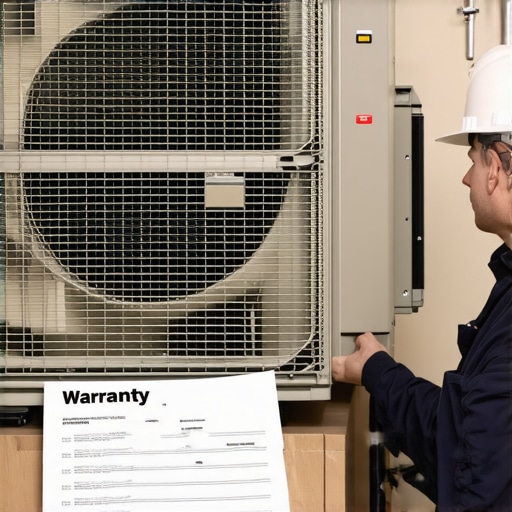
I can usually tell a compressor’s life story just by the smell of the service ports. If it’s got that sharp, acidic tang, I know the windings have turned into a copper soup. After 30 years in this trade, crawling through blown-in insulation and fighting off wasps on commercial rooftops, I’ve seen the industry pivot a dozen times. But 2026 is different. We aren’t just changing brands; we are changing the very physics of how your AC installation works. With the final transition to A2L refrigerants like R-454B, the old rules are dead. If you think your ’10-year parts warranty’ is a bulletproof shield, you’re in for a cold—or more likely, very hot—awakening.
“Design conditions shall be based on the local climate data as defined in ASHRAE Fundamentals to ensure equipment sizing meets both sensible and latent load requirements.” – ASHRAE Standard 55
Last August, I followed a ‘Comfort Consultant’—which is just a fancy term for a Sales Tech in a clean polo shirt—who had quoted a homeowner $22,000 for a full system replacement. He told her the ‘juice’ was discontinued and her evaporator coil was ‘bio-hazard levels of dirty.’ I walked in, saw the kid hadn’t even hooked up his gauges, and found a blown dual-run capacitor. A fifty-dollar part and twenty minutes of labor later, the compressor hummed back to life, pulling a steady 12 amps. That Sales Tech didn’t care about the furnace repair or the homeowner’s budget; he was chasing a commission on the new A2L mandates. This brings us to the shifting landscape of warranties. In 2026, manufacturers are tightening the screws, and if your installer isn’t a master of static pressure and thermodynamics, your warranty is worth less than a roll of cheap duct tape.
Loophole 1: The ‘Uncertified’ A2L Sensor Clause
The new refrigerants are ‘mildly flammable.’ Don’t panic; your house isn’t a tinderbox, but the EPA and manufacturers now require integrated leak sensors in most mini-split and central 14.3 SEER2 units. Here’s the catch: if those sensors aren’t calibrated or if the installer bypasses them because they keep ‘nuisance tripping’ due to high humidity levels, your entire equipment warranty is void. Manufacturers are using digital handshakes; if the control board doesn’t see a clean signal from that sensor during its first 100 hours of operation, they’ll flag the unit as ‘improperly commissioned.’ When that expensive inverter board fries in year three, they’ll pull the logs, see the sensor error, and deny the claim. They’ll claim the ‘latent heat’ load caused excessive condensation that fouled the sensor, blaming the AC installation rather than the part.
Loophole 2: The Static Pressure Trap (The Tin Knocker’s Revenge)
Airflow is the undisputed king of the mechanical room. Most heating service calls I get in the winter end up being a limit-switch trip because the return air duct is too small. In 2026, with higher-efficiency coils having more ‘fins per inch,’ the resistance to airflow (static pressure) is higher than ever. If your installer doesn’t perform a Manual D duct design and just slaps a new 5-ton unit on a 3-ton duct system, you are killing the blower motor. Manufacturers are now requiring photos of manometer readings (static pressure tests) at the time of install for the warranty to remain valid. If the static pressure is above 0.5 inches of water column and the motor burns out, they’ll call it ‘field-applied’ failure. They won’t pay for a new motor if your ducts are ‘choking’ the machine.
“The most expensive equipment in the world cannot overcome a bad duct system.” – Industry Axiom
Loophole 3: The Registration vs. Maintenance Gap
We all know about registering the unit within 60 days to get the 10-year vs. 5-year warranty, but by 2026, ‘Smart’ thermostats will be the primary snitch. Many high-end brands are now requiring ‘verifiable annual maintenance’ to keep the heat exchanger or compressor warranty active. If your furnace repair is needed in year seven, and the manufacturer sees that the unit hasn’t been serviced—meaning no one has cleaned the flame sensor or checked the suction line (it should be ‘beer can cold’ in the summer)—they can reject the claim. They want to see that the Pookie (mastic) on the plenum is intact and that the delta-T (temperature split) has been checked. They are tired of paying for ‘preventable’ failures caused by a $2 air filter that hasn’t been changed since the last eclipse.
Why Physics Doesn’t Care About Your Contract
Whether you’re in the humid South dealing with a ‘cold swamp’ feel or in the frozen North watching for flame rollout, the physics of the refrigeration cycle remains the same. When we do a mini-split install, we are looking at the dew point. If the unit is oversized, it ‘short cycles’—it hits the temperature setpoint so fast it never has a chance to pull the moisture out of the air. You end up with a house that’s 70 degrees but 75% humidity. That moisture sits on the coil, grows mold, and eventually eats through the copper. By 2026, manufacturers will use this ‘improper sizing’ as a reason to deny coil replacements. They’ll tell you the unit was too big for the sensible load, causing ‘premature corrosion’ that isn’t a factory defect. It’s a Tin Knocker’s nightmare, but it’s the reality of the new high-efficiency era. Don’t let a Sales Tech talk you into a ‘bigger is better’ unit; demand a load calculation or prepare to pay out of pocket when the heating service fails in the dead of winter. It’s about more than just ‘gas’ in the lines; it’s about the integrity of the entire thermodynamic loop.